
Online EMDR Therapist & Counsellor — UK & International
Pete Tobias Counselling
EMDR for Autistic Adults
Affirming, online EMDR therapy — shaped around how your nervous system actually works
Stress
Depression
Meltdowns
AuDHD
Monotropism
Anger
Anxiety
Autistic
Bullying
Sensory Overwhelm
Low confidence or self-esteem
Abandonment
ADD
Shutdowns
Alexithymia
This is how therapy can help you
A short welcome from Pete Tobias, EMDR Europe Accredited Practitioner. Press play to hear a little about how I work, who I support across the UK and internationally, and what reaching out might look like for you.
Duration: 1 min 25 secs
"Hello, and welcome. I'm Pete Tobias.
If you've found your way here, you're probably carrying something that's been weighing on you for a while — and I want you to know you're in the right place.
I'm an EMDR Europe Accredited Practitioner, and I work with people across the UK and internationally. EMDR is an evidence-based therapy for trauma and difficult life experiences, and for many people, working online is just as effective as meeting in person — with the added comfort of being somewhere familiar and safe.
I also offer counselling and EMDR for neurodivergent adults. I believe therapy should fit you — your way of processing, communicating, and making sense of the world — rather than asking you to fit it. We'd work together, collaboratively and flexibly, to find an approach that genuinely suits you.
Whatever's brought you here, you don't have to navigate it on your own. When you feel ready, get in touch, and we can take that first step together."
Welcome
A Safe Space to be your full self
I'm an EMDR Europe-accredited practitioner and BACP-accredited counsellor, working online with adults across the UK and internationally. I'm also neurodivergent myself.
I discovered this late, as an adult, during my own therapy training. It was life-changing. It was scary, too — it challenged who I thought I was and my sense of self. But it was also full of hope, because I finally found answers to why I'd always felt different, like I didn't quite fit in.
That experience is why I do this work. I understand a lot of it from the inside, not just from clinical training.

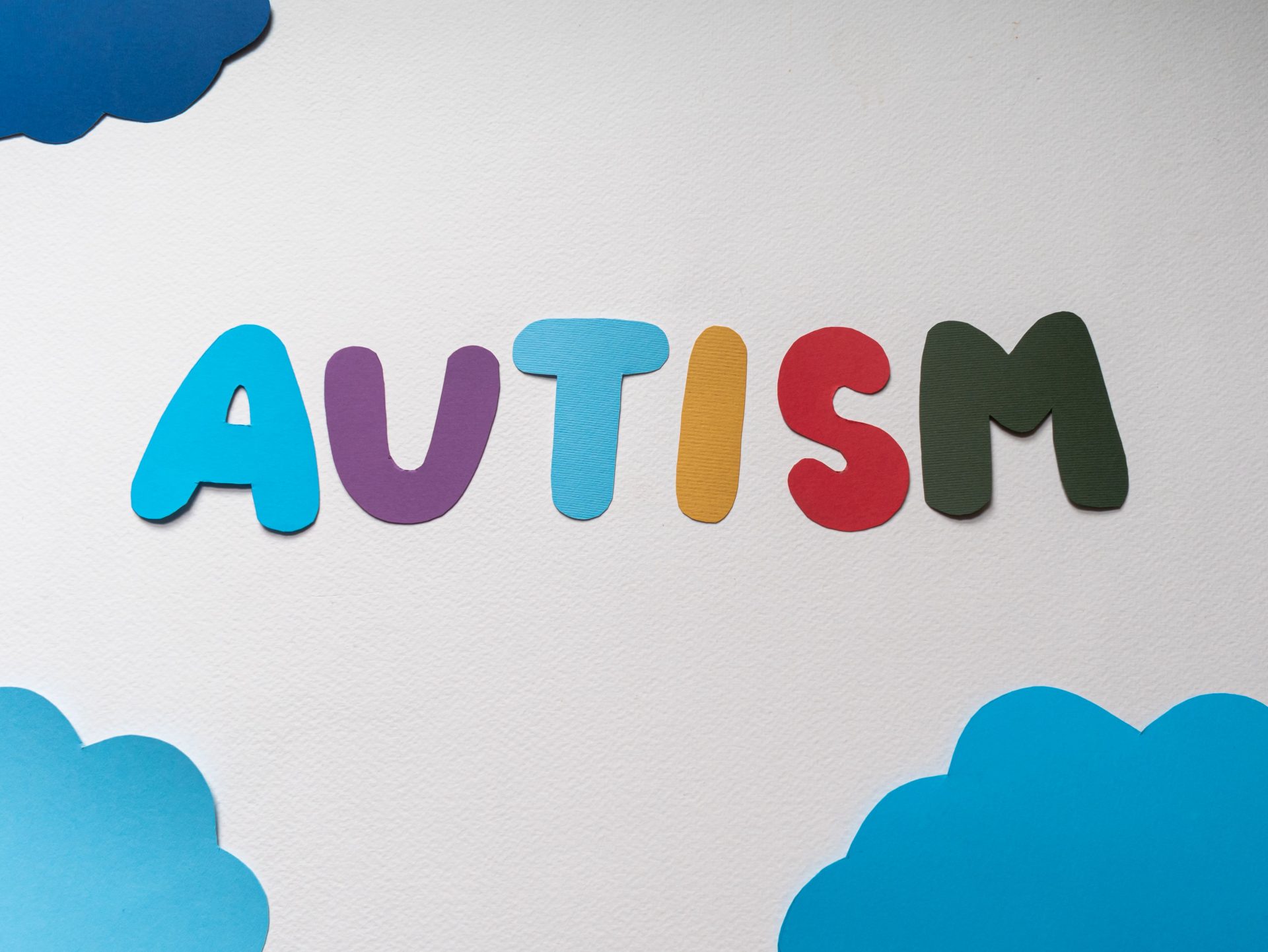
Neurodiversity-affirming online EMDR therapy for autistic
adults
Autism isn't something I believe needs fixing.
The emotional impact of living in a world that has repeatedly misunderstood you often does.
Many autistic adults come to therapy after years of masking, feeling different or quietly believing there is something fundamentally wrong with them. Others arrive after recognising they are autistic or receiving a diagnosis that finally makes sense of a lifetime of confusion. Alongside relief, that understanding can also bring grief for the years spent struggling without knowing why.
My role isn't to help you become less autistic. It's to help you process the emotional impact of what you've lived through, so you can develop a more compassionate, integrated and authentic relationship with yourself.
As an EMDR Europe Accredited Practitioner, BACP Accredited Counsellor and neurodivergent therapist, I've worked with many autistic adults and combine clinical expertise with lived experience. Whilst every person's story is unique, certain themes emerge repeatedly, helping explain why so many people continue carrying emotional burdens that were never theirs to carry.
I provide online EMDR therapy for autistic adults throughout the UK, allowing you to access therapy from an environment where you already feel more comfortable, familiar and regulated.
Find out more about Online EMDR Therapy in the UK.

Who This Page Is For
Whether you've recently received an autism diagnosis, have known for years, are self-identified or are still exploring whether autism helps explain your life,
this page is for autistic adults who want to better understand themselves and
process the emotional impact of what they've lived through.
What If I'm Also ADHD?
Many autistic adults are also ADHD. Often referred to as AuDHD, this brings together two neurotypes in a way that is unique to each individual rather than simply adding one to the other.
For some AuDHD adults, this can mean holding different needs at the same time. You may value predictability while also seeking novelty, enjoy connection while sometimes needing solitude, or experience both sensory seeking and sensory overwhelm. Alongside this, many AuDHD adults have experienced misunderstanding, rejection, masking, sensory trauma or the cumulative impact of living in a predominantly neurotypical world.
EMDR doesn't aim to change your neurodivergence. Instead, it helps process the experiences that continue to affect you in the present, while adapting therapy to the way you naturally process information, communicate and engage with the world.

You Don't Need to Become Less Autistic
I don't see autism as something that needs fixing, nor do I believe the goal of therapy is to help you become more neurotypical.
Much of the emotional suffering people bring to therapy doesn't arise because
they're autistic. It develops through years of adapting to a world that often misunderstands autistic ways of thinking, feeling and relating.
Over time, it's easy to lose sight of yourself. You may begin measuring yourself against neurotypical standards, wondering why you can't simply "try harder", or carrying a deep sense of shame that there's something fundamentally wrong with you.
From my perspective, those beliefs make sense.
If you've spent years receiving messages—directly or indirectly—that who you naturally are isn't quite acceptable, it's understandable that those messages
become woven into the way you see yourself.
Therapy isn't about making you less autistic. It's about changing the relationship you have with yourself because of what you've lived through, so you no longer carry the emotional burden of believing you should have been someone else.
As painful memories are processed and integrated, many people find they no longer relate to themselves through the same lens of shame, self-blame or comparison.
Difference no longer feels like something that has to be hidden, apologised for or overcome. Instead, it gradually becomes accepted as part of who they are.
What You Might Be Carrying
Many autistic adults first contact me because they're exhausted—not because they're autistic, but because they've spent years adapting to a world that often expects them to think, communicate and relate in neurotypical ways.
Masking can involve maintaining eye contact that doesn't feel natural, monitoring facial expressions, filling silences before they become uncomfortable or continually analysing conversations to work out whether you've "got it right". Over time, that constant self-monitoring can become exhausting, leaving many people dysregulated or experiencing autistic burnout.
For others, the burden shows itself differently. You may experience shutdowns or meltdowns, carry painful childhood memories, struggle in relationships or feel a persistent sense of being different without knowing why. You may also be living with anxiety, depression, trauma or burnout that has developed over many years.
People don't usually come to therapy because they want to become less autistic.
They come because they're tired of carrying the emotional impact of living in a world that hasn't always understood who they are.

Grief After Realising You're Autistic
For many autistic adults, recognising they are autistic or receiving a diagnosis
can be life-changing. Alongside relief and a growing sense that life finally
makes sense, another emotion often emerges: grief.
Grief is a natural response to loss, yet it doesn't always move freely. Sometimes there hasn't been an environment where those losses could be acknowledged. Sometimes the barriers come from within, through thoughts such as, "It wasn't that bad" or "What do I have to grieve?"
Those losses are deeply personal. They may include years spent believing you were broken, relationships that never developed as you'd hoped, opportunities that were never pursued or the emotional energy spent trying to become someone you were never meant to be.
Recognising you're autistic doesn't create those losses.
It simply helps explain them.
In therapy, we create an environment where grief can be acknowledged, experienced and gradually processed. Through EMDR and a strong therapeutic relationship, painful memories lose their emotional weight and become part of your life story rather than continuing to define how you see yourself.
The goal isn't to forget what happened.
It's to allow the past to find its rightful place, so it no longer determines your present or limits your future.
A Neurodiversity-Affirming Approach
Every autistic person is different. There isn't one right way to experience autism, just as there isn't one right way to experience therapy. I don't expect you to adapt to my way of working. I believe therapy should adapt to you, because when people no longer have to spend their energy adapting to therapy, they have far more capacity to engage in it.
That begins with understanding your nervous system, sensory profile, relationships and life history. Rather than applying a fixed therapeutic model, I believe it's more important to develop a formulation that fits the individual than to expect the individual to fit the formulation.
In practice, that may mean adapting the pace of EMDR, making eye contact optional, accommodating sensory differences, recognising alexithymia or working with monotropism rather than against it. Many autistic adults also experience co-occurring neurodivergence, such as ADHD, dyslexia or dyspraxia, which may also shape the way therapy is adapted.
Most importantly, I don't assume I understand your story because you're autistic or because I'm neurodivergent. My role is to remain curious, listen carefully and work collaboratively to understand who you are, what you've lived through and what you need from therapy.
Rather than trying to fit you into a preconceived psychological model, therapy begins by understanding the model that already exists within you.
The better we understand why something made
sense to you at the time, the better we're able to understand how to help you in the present.


Becoming More Fully Yourself
One of the changes I often notice as therapy progresses is that people begin
relating to themselves differently. This isn't simply about feeling less anxious or overwhelmed. It's about developing a different relationship with yourself.
As painful memories are processed, many autistic adults begin integrating their autistic identity into the way they see themselves. Instead of viewing themselves through years of misunderstanding, criticism or other people's
expectations, they begin relating to themselves with greater clarity, self-compassion and acceptance.
Over time, you may spend less energy comparing yourself with neurotypical people and more time discovering what genuinely works for you. Rather than trying to contort yourself into shapes that don't represent who you are, you begin giving yourself permission to live in ways that reflect your own values, needs and way of experiencing the world.
As your sense of self becomes more secure, it often becomes easier to regulate yourself, establish healthier boundaries and recognise what belongs to you and what doesn't. Instead of automatically carrying responsibility for everyone around you, you become clearer about what you can genuinely influence and what you cannot.
Perhaps most importantly, therapy creates the opportunity to know yourself separately from the projections that other people have placed upon you.
Difference no longer feels like something that needs to be hidden, apologised for or rejected. It simply becomes part of who you are.
The goal isn't to create a different person.
It's to help you become more fully yourself.
Why Work With Me?
Alongside my EMDR accreditation and clinical experience, I bring the perspective of someone who has also travelled their own journey of understanding and integrating neurodivergence. That journey has shaped the way I think about therapy, but it doesn't mean I assume your story will be the same as mine.
If anything, it's had the opposite effect. It reminds me that every autistic
person is unique. Whilst there are often shared themes, no two lives are the
same. My role isn't to tell you who you are, but to listen carefully, remain
curious and work alongside you to understand what has shaped your life and what you need from therapy.
If, as you've been reading this page, you've recognised parts of your own story,
I'd like to invite you to book a complimentary 15-minute consultation.
Choosing a therapist is an important decision, and a website can only tell you so much.
Meeting together gives us the opportunity to explore what's brought you here, answer any questions you may have and, most importantly, help you decide whether I feel like the right therapist for you.
All sessions take place online, allowing you to engage in therapy from the
familiarity of your own environment, without the need to travel or adapt to an
unfamiliar clinical setting.
Sometimes a conversation tells you far more than words on a screen ever can.
What To Expect From Our First Consultation
Meet with me for 15 minutes, ask the questions that matter to you, and get a sense of what it might be like working together. You’ll quickly know whether I feel like the right therapist for you, and I’ll let you know honestly whether I think I can help.
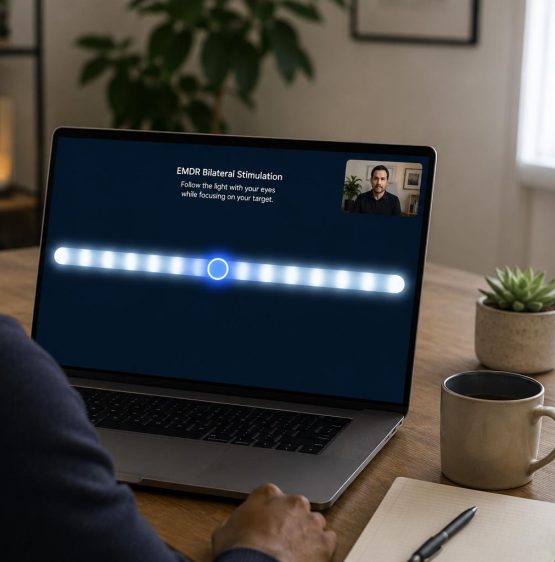
If you are specifically looking for EMDR therapy online, you can read more about the approach and what to expect here.
EMDR Therapy Online
EMDR therapy online is a structured, evidence-based approach for processing trauma, distressing memories, anxiety, and emotional overwhelm. Sessions are delivered securely online and follow a phased model including preparation, resourcing, and reprocessing.
Testimonials

My location
I specialise in online EMDR therapy — a NICE-recommended, evidence-based treatment for trauma, PTSD and anxiety. As an EMDR Europe Accredited Practitioner, I offer a safe and supportive space for clients to process trauma and find growth and healing, all via secure video from the comfort of their own home.
Please get in touch to arrange a free 15-minute consultation — an opportunity to ask any questions and get a sense of what it might be like to work together.
Fees & availability
Counselling and EMDR sessions for individuals are 50 minutes long and usually take place on a weekly basis. The cost per session is £100. Please get in touch to enquire about availability and further information about pricing.
If you want to cancel an appointment, I require 48 hours’ notice, otherwise you will need to pay for sessions missed.
If you are experiencing difficulties and are looking for EMDR therapy online or counselling, please complete the booking form to arrange a no-pressure, free 15-minute consultation, or proceed to book an initial full assessment session for online EMDR therapy and counselling.

You May Still Have Some Questions...
What if I'm not sure EMDR is right for me?
That's okay. Beginning therapy doesn't mean committing to EMDR. We first take time to understand what has brought you here, how you experience the world and what feels important to you. If EMDR seems appropriate, we can decide that together. If it doesn't, we'll talk about what might.
What if I struggle to explain how I'm feeling or don't know what to say?
You don't need to find the perfect words. Many autistic adults have spent years trying to describe experiences that don't fit neatly into language. Therapy isn't about saying the right thing. If having more structure feels helpful, we can work that way. You're welcome to email me a few questions or thoughts before our complimentary 15-minute consultation, and we can use those as a starting point during our conversation. We simply begin wherever feels most manageable.
What if nothing particularly 'big' has happened to me?
Many autistic adults wonder this. Therapy isn't about deciding whether your experiences were 'bad enough'. It's about understanding how your nervous system has been shaped by your life. Sometimes it's a single event. Sometimes it's years of feeling misunderstood, overwhelmed or having to adapt to environments that never quite fitted. Whatever your experiences, we'll approach them with curiosity rather than judgement.
What if I want to turn my camera off during the session?
That's absolutely okay. Many autistic adults find that reducing visual demands helps them think more clearly or feel less overwhelmed. You can let me know beforehand, use the chat box if that's easier, or simply turn your camera off during the session. I won't assume anything is wrong or ask you to switch it back on. We'll continue in whatever way feels most comfortable for you.
Take The Next Step
If something on this page has resonated with you, I'd be pleased to hear from you. Whether you're ready to begin EMDR or simply have questions about how it works, you're welcome to arrange a complimentary 15-minute consultation.
There is no obligation to continue afterwards. The consultation simply provides an opportunity to decide whether working together feels like the right fit.

Get in touch
If you have any questions about EMDR therapy or Online Counselling, you’re very welcome to get in touch. I offer a free 15-minute consultation—an opportunity for us to talk about what’s bringing you to therapy, whether EMDR could be a helpful approach, and whether we might be a good fit to work together.
You can:
- Fill out the contact form
- Or call or message me on +44 (0)7815 156 495 if you'd prefer to speak directly or leave a voicemail.
I’m happy to answer any questions you may have before booking your first appointment.
I aim to respond to all enquiries within 24 hours. All contact is treated with the utmost confidentiality and handled using secure phone and email services. You can learn more about how your information is protected by reading my Privacy Policy.