
Online EMDR Therapist & Counsellor — UK & International
Pete Tobias Counselling
Stress
Depression
Meltdowns
Panic
Physical sympoms
Anger
Hopelessness
ANXIETY
Difficulty Concentrating
Restlessness
Emotional Overwhelm
Irritability
Fatigue
Dread
Suicidal Thoughts
Anxiety & Overwhelm
Understanding Anxiety – and Why Therapy Can Help
Anxiety can feel overwhelming. It can affect the way you think, the way you feel and even the way your body responds to everyday situations. For some people, it appears suddenly. For others, it has quietly become part of daily life.
If you're living with anxiety, you may find yourself asking:
- Why do I feel like this?
- Why can't I switch it off?
- Will I always be this anxious?
I don't believe anxiety means something is wrong with
you. More often, it makes sense once we understand your life experiences, relationships and the unique way your nervous system has learned to respond to the world.
As a BACP Accredited counsellor and EMDR Europe Accredited Practitioner, I provide online EMDR therapy and counselling for adults across the UK and internationally, helping people understand their anxiety and work towards lasting change.
This is how therapy can help you
A short welcome from Pete Tobias, EMDR Europe Accredited Practitioner. Press play to hear a little about how I work, who I support across the UK and internationally, and what reaching out might look like for you.
Duration: 1 min 25 secs
"Hello, and welcome. I'm Pete Tobias.
If you've found your way here, you're probably carrying something that's been weighing on you for a while — and I want you to know you're in the right place.
I'm an EMDR Europe Accredited Practitioner, and I work with people across the UK and internationally. EMDR is an evidence-based therapy for trauma and difficult life experiences, and for many people, working online is just as effective as meeting in person — with the added comfort of being somewhere familiar and safe.
I also offer counselling and EMDR for neurodivergent adults. I believe therapy should fit you — your way of processing, communicating, and making sense of the world — rather than asking you to fit it. We'd work together, collaboratively and flexibly, to find an approach that genuinely suits you.
Whatever's brought you here, you don't have to navigate it on your own. When you feel ready, get in touch, and we can take that first step together."

Anxiety Is Your Mind's Warning System
Anxiety is not your enemy.
It is an adaptive survival system that has evolved to protect us from danger. When your brain believes there is a threat, your body prepares to respond automatically.
The difficulty is that our nervous system doesn't only learn to recognise threats to our physical safety. It can also learn to respond to experiences such as rejection, conflict, uncertainty, criticism, grief or overwhelming stress as though they are dangers that require protection.
Anxiety isn't usually trying to harm you.
It's trying to protect you.
Anxiety often makes perfect sense once we understand what
your nervous system has learned to protect you from.
Wondering whether EMDR is right for you?
You don't need to have everything figured out before getting in touch. A complimentary 15-minute consultation gives us the opportunity to discuss what's bringing you to therapy, answer any questions you may have, and help you decide whether I feel like the right therapist for you.

Why Does Anxiety Develop?
No two people experience anxiety in exactly the same way because no two people have lived exactly the same life.
Our nervous system is shaped by our experiences. Relationships, trauma, grief, work, stress, identity and significant life events all influence how we experience safety and threat.
For one person, anxiety may develop following a traumatic event. For another, it may emerge gradually through years of pressure, responsibility or chronic stress. For some neurodivergent people, anxiety begins to make more sense after recognising they are ADHD or autistic, offering a new understanding of lifelong experiences rather than a new explanation for them.
Rather than asking, "What causes anxiety?" I find it more helpful to ask:
"What has my nervous system learned that it is trying to protect me from or respond to?"
Anxiety Affects More Than Your Thoughts
Although anxiety is often thought of as worrying, it usually affects much more than our thoughts.
Body – racing heart, muscle tension, panic, nausea, dizziness or restlessness.
Mind – excessive worry, overthinking, rumination and constantly expecting something to go wrong.
Emotions – fear, dread, overwhelm and a persistent feeling that it's difficult to relax.
These experiences don't exist separately. They continually influence one another, which is why anxiety can sometimes feel so overwhelming.

Why Doesn't Anxiety Simply Go Away?
Anxiety rarely exists in isolation.
It develops within the wider system of your life—your experiences, relationships, environment and the way your nervous system has learned to respond to the world.
For some people, anxiety is maintained by unresolved trauma.
For others it reflects chronic stress, difficult relationships, grief, identity or years of carrying too much. Often, it's a combination of many different factors.
This is why two people can experience similar anxiety but benefit from very different therapeutic approaches.
The question isn't simply "How do I stop feeling anxious?" but "What is my anxiety trying to protect me from and what is it in response to?"
How Therapy Can Help
I believe anxiety makes sense within the context of each person's life.
Rather than focusing solely on reducing symptoms, therapy helps us understand what your nervous system has learned, what continues to keep it alert and what may need to change for it to feel genuinely safe again.
For one person, this may involve processing unresolved experiences through EMDR. For another, it may mean exploring grief, resolving the impact of difficult life experiences, understanding relationship patterns or making practical changes to reduce ongoing stress and overwhelm.
Because every person's anxiety is different, therapy should be tailored to the individual rather than expecting the individual to fit a particular therapeutic approach.

Why EMDR Can Help Anxiety
EMDR is a powerful, evidence-based therapy that can be highly effective for many forms of anxiety.
Unlike approaches that focus primarily on managing symptoms, EMDR works with the experiences that continue to influence the present. It considers the past, present and future, helping reduce the emotional, physical and cognitive impact of anxiety.
Because EMDR works with the body, emotions, thoughts and underlying beliefs, it is particularly well suited to anxiety, where these parts of our experience often become closely interconnected.
What To Expect From Our First Consultation
Meet with me for 15 minutes, ask the questions that matter to you, and get a sense of what it might be like working together. You’ll quickly know whether I feel like the right therapist for you, and I’ll let you know honestly whether I think I can help.

If you are specifically looking for EMDR therapy online, you can read more about the approach and what to expect here.
EMDR Therapy Online
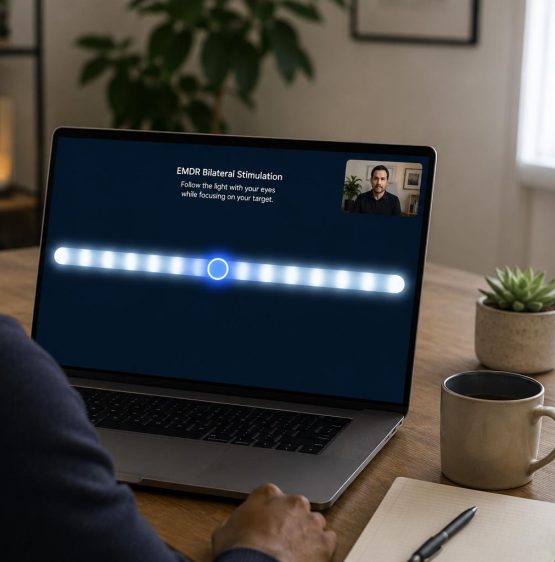
EMDR therapy online is a structured, evidence-based approach for processing trauma, distressing memories, anxiety, and emotional overwhelm. Sessions are delivered securely online and follow a phased model including preparation, resourcing, and reprocessing.
Who Am I?
My name is Pete Tobias. I am a neurodivergent BACP Accredited counsellor and EMDR Europe Accredited Practitioner. I offer individual counselling and EMDR therapy to adults aged 18+.
I discovered I was neurodivergent as an adult during my own therapy training. That experience changed how I understand trauma, attention, emotional regulation and the nervous system. Today I combine EMDR with a neurodiversity-affirming approach, adapting sessions around how ADHD brains actually process information rather than expecting clients to fit a traditional therapy model.



Testimonials

My location
I specialise in online EMDR therapy — a NICE-recommended, evidence-based treatment for trauma, PTSD and anxiety. As an EMDR Europe Accredited Practitioner, I offer a safe and supportive space for clients to process trauma and find growth and healing, all via secure video from the comfort of their own home.
Please get in touch to arrange a free 15-minute consultation — an opportunity to ask any questions and get a sense of what it might be like to work together.
Fees & availability
Counselling and EMDR sessions for individuals are 50 minutes long and usually take place on a weekly basis. The cost per session is £100. Please get in touch to enquire about availability and further information about pricing.
If you want to cancel an appointment, I require 48 hours’ notice, otherwise you will need to pay for sessions missed.
If you are experiencing difficulties and are looking for EMDR therapy online or counselling, please complete the booking form to arrange a no-pressure, free 15-minute consultation, or proceed to book an initial full assessment session for online EMDR therapy and counselling.

You May Still Have Some Questions...
I've always been an anxious person. Can therapy really help?
Many people feel as though anxiety has become part of who they are, especially if it has been present for many years. Yet anxiety often develops for understandable reasons, shaped by life experiences, relationships and the way your nervous system has learned to protect you. Understanding those patterns can open the door to meaningful and lasting change.
I don't know why I'm anxious.
You don't need to have the answers before starting therapy. In fact, many people come because they can't make sense of why they feel the way they do. Together we can explore your experiences, identify patterns and develop a better understanding of what your anxiety may be trying to communicate.
What if talking about it makes everything worse?
This is one of the most common concerns people have. Therapyshouldn't feel overwhelming or force you to revisit experiences before you're ready. We work collaboratively and at a pace that feels manageable, creating enough safety and stability before exploring more difficult experiences. You remain in control throughout the process.
Is my anxiety 'bad enough' to justify therapy?
You don't need to reach a crisis before asking for support. Many people seek therapy because anxiety is gradually taking more from their lives than it gives back. If it is affecting your relationships, work, confidence or ability to enjoy life, it may be worth exploring rather than waiting for it to become more severe.
I think I should be able to deal with this on my own.
Many people tell themselves this before seeking therapy. Reaching out for support isn't a sign of weakness or failure—it's a recognition
that something is taking more of your energy than it should. Therapy isn't about telling you what to do; it's about helping you better understand yourself, your experiences and the patterns that may no longer be serving you.

Begin Understanding Your Anxiety
Anxiety doesn't have to define your life.
Whether your anxiety has been present for months or many
years, therapy offers the opportunity to understand why it developed, what continues to maintain it and what meaningful change could look like for you.
If you'd like to explore whether EMDR or counselling
feels right for your situation, I offer a complimentary 15-minute online consultation.
Get in touch
If you have any questions about EMDR therapy or Online Counselling, you’re very welcome to get in touch. I offer a free 15-minute consultation—an opportunity for us to talk about what’s bringing you to therapy, whether EMDR could be a helpful approach, and whether we might be a good fit to work together.
You can:
- Fill out the contact form
- Or call or message me on +44 (0)7815 156 495 if you'd prefer to speak directly or leave a voicemail.
I’m happy to answer any questions you may have before booking your first appointment.
I aim to respond to all enquiries within 24 hours. All contact is treated with the utmost confidentiality and handled using secure phone and email services. You can learn more about how your information is protected by reading my Privacy Policy.