
Shame
"Not Good Enough"
PTSD
Rejection Sensitivity
Neurodivergent Trauma
"I Am Not Enough"
Anxiety
EMDR Intensives
Grief and Loss
Trauma
Medical Trauma
Abandonment
Fear
Perfectionism
People Pleasing
EMDR Intensives UK: Online and In-Person in London
What Is an EMDR Intensive?
An EMDR Intensive is a concentrated way of working with EMDR therapy using extended sessions rather than traditional weekly appointments. It creates dedicated time to work with a specific traumatic experience, belief, pattern or therapeutic theme while maintaining momentum within the therapeutic process.
Weekly therapy isn't the only way to work. Rather than spreading the work across several months of weekly sessions, an intensive creates a dedicated period of time in which we can stay with the therapeutic process for longer.
For some people, this can allow several months' worth of therapeutic work to take place within a day or a small number of days.
I offer online EMDR Intensives and periodic in-person EMDR Intensives in London Bridge, London.
Single-day intensive · Online or London Bridge · £1,099 · Includes discovery, assessment, preparation, six-hour intensive and follow-up


Why Choose an EMDR Intensive?
An intensive can provide another way of working when you want to give a particular area of your life focused therapeutic time and attention.
Maintain Therapeutic Momentum
Extended sessions allow us to stay with the therapeutic work for longer without repeatedly stopping and restarting between weekly appointments.
Once a relevant memory network is activated, we have more time to follow the memories, associations and themes connected with your therapeutic goal.
Create Dedicated Time for a Specific Goal
An intensive gives us a defined period of time to focus on a particular experience, belief, pattern or theme. Rather than trying to address everything, we establish a therapeutic goal and build the intensive around the experiences and memory networks connected with it.
Fit Therapy Around Your Life
Weekly therapy isn't practical for everybody.
An intensive may suit people who want to deliberately set aside a weekend or period of leave for therapeutic work, including those with demanding work schedules, students, or people travelling who cannot easily commit to regular weekly appointments.
Wondering Whether an EMDR Intensive Is Right For You?
You don't need to have everything figured out before getting in touch. A complimentary 50-minute discovery session gives us the opportunity to explore what you would like to focus on during an EMDR intensive, discuss whether this way of working feels suitable for you, and answer any questions you may have before deciding whether to go ahead.


How Is an EMDR Intensive Different from Weekly EMDR?
In weekly therapy, part of each session may be spent reconnecting with what has happened since we last met, preparing for processing and ensuring there is enough time to close the session safely.
An EMDR intensive gives us a longer therapeutic window. Once a memory network is activated, we have more time to stay with the processing, follow associations and work with connected experiences without having to stop simply because the therapy hour has ended.
This can help maintain therapeutic momentum, while still allowing the work to move at a pace that feels manageable.
What Can an EMDR Intensive Focus On?
EMDR Intensives can focus on a specific traumatic experience, a group of related memories, a negative belief about yourself or a
broader therapeutic theme. The work begins with a therapeutic goal, and we identify the memories and experiences that appear to be connected with it.
That might involve a particular traumatic experience, but it doesn't have to.
We might work with a recurring belief such as:
“I'm not enough.”
“I'm not good enough.”
Or the focus might involve an inner critic, fear of abandonment, relationship loss or another pattern that continues to affect how
you experience yourself.
EMDR Intensives can focus on experiences, difficulties and therapeutic goals including:
- A car accident or other traumatic event
- Assault
- Grief and loss
- The ending of a relationship
- Fear of abandonment
- Historic or recent traumatic experiences
- Sports performance
- Leadership challenges
- Fear of conflict
- Anxiety around presentations or performance
- Persistent negative beliefs about yourself
- An internal critical voice
- Neurodivergent burnout
- Rejection sensitivity / RSD
- Neurodivergent trauma
- Bullying, exclusion or feeling different
- Late identification and making sense of the past
The targets we work with are based around your therapeutic
goal and the memories and experiences connected with it.


Why Work With Me?
Choosing a therapist for an EMDR intensive is an important decision. Intensive work involves setting aside an extended period of time to focus on a particular experience, pattern or theme, so feeling safe, understood and able to work collaboratively matters.
As an EMDR Europe Accredited Practitioner and BACP Accredited Counsellor, I work with adults experiencing trauma, anxiety and the lasting impact of difficult life experiences, with a particular focus on neurodivergent adults. I also bring lived experience of neurodivergence, which informs how I understand and adapt EMDR.
My approach to intensives is focused without being rushed. We agree together what you want to work on, prepare carefully for the processing work, and use the additional time available in an intensive to stay with that focus without the usual limits of a 50-minute session.
An intensive isn't about trying to process everything at once or pushing through as much material as possible. It's about creating a contained period of focused therapeutic work, with enough time for preparation, processing and integration, while keeping the pace manageable.
For some people, this offers a different way of working from weekly therapy: a specific focus, extended sessions and the opportunity to do a concentrated piece of EMDR work over a shorter period of time.

Working with Themes, Beliefs and Memory Networks
Sometimes the experience we initially identify is only one part of a larger memory network.
There may be earlier memories underneath it, later experiences that reinforce it, or several experiences organised around the same underlying belief or theme.
The extended format gives us an opportunity to work with these connections as they emerge.
I hold your therapeutic goal throughout the intensive while also working with your internal associative system.
This means we have a focus, but not a predetermined route.
We can respond flexibly to what emerges while keeping sight of where you want the work to take you.

How Does an EMDR Intensive Work?
A single-day EMDR Intensive involves a free 50-minute discovery session, two 50-minute assessment and preparation sessions, a six-hour intensive and a 50-minute follow-up session. The assessment work allows us to establish the therapeutic goal and begin creating a blueprint for the intensive.
1. Free 50-Minute Discovery Session
We begin with a 50-minute discovery session at no charge.
This is not a therapy session.
It is an exploratory conversation where we discuss what you would like to work on, your reasons for considering intensive therapy and whether an EMDR Intensive appears to be an appropriate fit.
We also consider whether a single-day or multi-day intensive may be more appropriate.
There is no obligation to proceed.
2. Two 50-Minute Assessment & Preparation Sessions
If we agree to work together, we have two 50-minute assessment and preparation sessions before the intensive.
Here we explore your history in more detail, clarify your therapeutic goal and identify the memories, experiences, beliefs and themes
that may be relevant.
Together, we begin creating a blueprint for the intensive.
Preparation is part of the therapeutic work. We also consider your current stability, resources and what your nervous system may need to engage safely with the intensive process.
3. Six-Hour EMDR Intensive
The intensive itself lasts six hours, including a 30-minute lunch break.
There are also shorter breaks throughout the day.
This isn't six hours of continuous EMDR reprocessing.
The work is paced according to your nervous system, capacity and what is happening within the therapeutic process. EMDR is the primary therapeutic approach, but I may also integrate related approaches such as Flash and Internal Family Systems (IFS) where appropriate to support your therapeutic goals.
4. 50-Minute Follow-Up Session
Your intensive also includes a 50-minute follow-up session, arranged at a mutually convenient time.
We use this session to identify what has changed, consider how the work is integrating and explore anything that has emerged since the
intensive that may be important.
Who Is an EMDR Intensive Suitable For?
EMDR Intensives may be suitable for people who want to focus therapeutic work on a particular experience, belief, difficulty or theme and have sufficient emotional and practical stability to engage with an extended period of therapy. Suitability is considered individually during the discovery and assessment process.
An intensive can also provide a practical alternative for people who find regular weekly therapy difficult to accommodate.
This might include people with demanding work schedules, students, people travelling, or someone who wants to deliberately set aside a weekend or period of leave to focus on therapeutic work.
Readiness can involve a felt sense that you are ready to engage with something more intensively, alongside enough emotional stability to open up difficult material where the work relates to the past.
You don't need to determine clinical readiness by yourself.
That is an important part of the discovery and assessment process.

Online EMDR Intensives
Online EMDR Intensives provide the same extended format remotely, allowing focused EMDR work to take place without travelling to a
therapy room. The six-hour intensive typically takes place on a Saturday, with the discovery, assessment and follow-up sessions arranged separately during the week.
This can be particularly useful if regular weekly therapy is difficult to accommodate around work, study, travel or other commitments.
For some people, this can allow a substantial amount of therapeutic work to take place within a day or a small number of days, rather than spreading the work across a longer period of weekly sessions.
Online single-day EMDR Intensive: £1,099
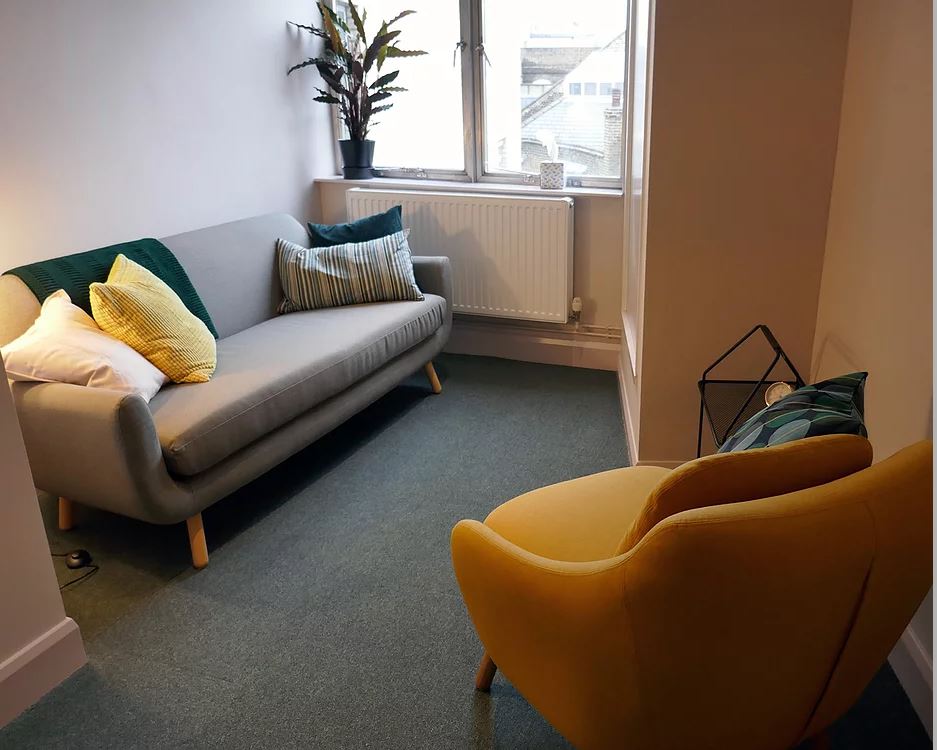
In-Person EMDR Intensives – London Bridge
In-person EMDR Intensives take place periodically in London Bridge, London, with both single-day and multi-day intensive work available where appropriate. Dates are offered at selected times during the year and expressions of interest can be registered in advance.
Sessions can take place on weekdays or Saturdays depending on availability, scheduling and the duration of the intensive.
Multi-day work may be appropriate where there are several therapeutic themes, multiple targets or layers of subsequent challenging experiences connected with the original difficulty.
In-person intensives can also be useful for people travelling to London who want to dedicate a particular period of time to therapeutic work.
In-person single-day EMDR Intensive in London: £1,099
If you are interested in an in-person EMDR Intensive in London Bridge, email me to register your expression of interest and I can let you know about forthcoming dates and availability.

Single-Day or Multi-Day EMDR Intensives?
Whether a single-day or multi-day intensive is appropriate depends on your therapeutic goal, history and the scope of the work. Multiple themes, targets or layers of connected experiences may mean that
additional intensive time is appropriate.
We begin considering this during the discovery session. The amount of time is determined around the work rather than choosing a package first and trying to fit the therapy into it.
We also review next steps before the end of an intensive.
Further therapeutic work may sometimes be useful, including additional
sessions.
Multi-day EMDR Intensives are available for in-person work in London Bridge where appropriate.
EMDR Intensive Therapy Is Paced to Your Nervous System
Intensive describes the format of the therapy, not how hard you are expected to push yourself. The work is paced according to your nervous system, emotional capacity and what emerges during the therapeutic process.
I hold your therapeutic goal and the structure of the intensive while remaining attuned to what is happening for you throughout the process.
Your internal system and associations help guide where the work needs to go. My role is to maintain the therapeutic environment, safety, attunement and pacing while guiding you through the intensive and keeping the work connected with the goal we have established together.
Sometimes we follow something unexpected.
Sometimes we slow down.
Sometimes we need to work with something that initially appears to be getting in the way.
The process remains structured, but it is also responsive to you.
What Is the Aim of an EMDR Intensive?
The aim of an EMDR Intensive is not simply to understand an experience differently, but for change to become felt within the body and nervous system. Experiences that were previously disturbing, unprocessed or fear-inducing may begin to become integrated and sit differently within you.
A belief you intellectually know isn't true may begin to feel less true.
A memory may remain part of your history without continuing to carry the same emotional or physiological charge.
As experiences become more integrated, there can be less need to continually manage fearful, traumatised or highly activated parts of
yourself.
The aim is ultimately for you to experience more of your
full self, rather than organising your life around what previously needed
to be avoided, controlled or managed.

What Does the Research Say About Intensive EMDR Therapy?
EMDR is often delivered in weekly 50- or 60-minute sessions, but this is not the only way that trauma-focused therapy can be structured. An EMDR intensive can also be thought of as extended-session EMDR, allowing therapeutic sessions to continue beyond the standard therapy hour.
Research comparing intensive and weekly approaches to trauma-focused therapy is encouraging. A study comparing intensive daily EMDR with weekly EMDR found significant reductions in PTSD symptoms with both approaches, with improvements maintained at one-year follow-up. The intensive format allowed the therapeutic work to take place over a much shorter period of time.
Larger randomised studies of other established trauma-focused therapies have found similar results. Research comparing intensive and weekly Prolonged Exposure, for example, finds comparable reductions in PTSD symptoms, while intensive Cognitive Therapy for PTSD has also been delivered successfully over a much shorter period than conventional weekly treatment.
This fits with what I have experienced when running longer EMDR sessions. Extended time can allow us to complete pieces of therapeutic work while someone is ready, motivated and still in touch with the relevant memories, emotions and thoughts. Rather than having to close the work because the therapy hour has ended, we have more opportunity to maintain momentum and make efficient use of the time available.
The research does not suggest that intensive therapy is inherently better than weekly therapy, and neither format is right for everybody. What it does suggest is that intensive trauma therapy is a viable alternative to traditional weekly treatment and an option worth considering further when the person, their circumstances and the work they want to undertake are suited to this way of working.
Research referenced:
- Hurley (2018) — compared intensive daily EMDR with weekly EMDR for PTSD; both produced significant improvements maintained at one-year follow-up. Frontiers in Psychology, 9, 1458.
- Foa et al. (2018) — randomised trial comparing concentrated and spaced Prolonged Exposure for PTSD; the concentrated format produced comparable PTSD outcomes. JAMA, 319(4), 354–364.
- Ehlers et al. (2014) — randomised trial comparing 7-day intensive Cognitive Therapy for PTSD with standard weekly Cognitive Therapy. American Journal of Psychiatry, 171(3), 294–304.

Can EMDR Intensives Produce Faster Therapeutic Change?
The extended format of an EMDR Intensive creates an opportunity for substantial therapeutic work within a concentrated period. Some people experience rapid insights or shifts, while for others therapeutic change develops more gradually. Individual outcomes cannot be guaranteed.
Everyone's history, nervous system and circumstances are different.
The focus can also evolve during the work. A memory or theme may emerge that we hadn't anticipated when creating the original blueprint.
This doesn't necessarily mean we have moved away from your goal. It may form part of the pathway towards it.
We therefore begin with a clear therapeutic direction while remaining open to what your internal system brings into the work.
Testimonials
How much does an EMDR Intensive cost?
A single-day online or in-person EMDR Intensive costs £1,099. The fee includes two assessment and preparation sessions, the six-hour intensive and a follow-up session. The initial 50-minute discovery session is provided at no charge.
The complete programme includes:
- 50-minute discovery session — no charge
- Two 50-minute assessment and preparation sessions
- Six-hour EMDR Intensive, including a 30-minute lunch break and additional shorter breaks
- 50-minute follow-up session
Following the discovery session, if we agree to proceed, a 50% payment of £549.50 secures your intensive date. The remaining £549.50 is payable one week before the intensive.
Full cancellation, rescheduling and statutory cancellation terms are provided before you book.
Will I feel tired after an EMDR Intensive?
Intensive therapy takes energy and you are likely to feel tired at the end of the day. I recommend keeping your schedule light afterwards and
adjusting commitments where possible so that you have space for recovery and integration.
How do I know if I'm ready for an EMDR Intensive?
Readiness isn't about being completely free from anxiety
about doing the work. It can involve a felt sense of emotional readiness to engage with something intensively, alongside enough emotional stability to open up difficult material where the work relates to the past.
There also needs to be practical readiness: having the time
to commit to the intensive and recovery afterwards, and being comfortable with the financial commitment involved.
You don't need to determine clinical readiness by yourself.
Assessing whether intensive work is appropriate is an important purpose of the discovery and assessment process.


When an EMDR Intensive May Not Be the Right Starting Point
An EMDR Intensive may not be the appropriate starting point when someone needs more time to establish emotional or practical stability before undertaking extended reprocessing work. In these circumstances, a period of regular therapy may be more appropriate before considering an intensive.
This isn't always clear-cut.
There are ways we can develop and support stability within intensive work itself, but sometimes a period of more focused regular therapy is appropriate first.
There also needs to be sufficient stability in your current life to undertake concentrated therapeutic work. This includes considering current risk and whether coping mechanisms such as addictions are sufficiently stable.
We explore this together rather than expecting you to make that clinical judgement alone.
Continue Exploring
EMDR Therapy – Learn how EMDR works and the types of difficulties it can help with.
EMDR for ADHD Adults – Explore how EMDR can be adapted for ADHD adults through a neurodiversity-affirming approach.
What Is EMDR Therapy? – An evidence-informed introduction to EMDR, including how memories are processed and why it can be effective.
Online EMDR Therapy – Learn about online EMDR, what to expect and the evidence supporting its effectiveness.
EMDR for Autistic Adults – Discover how EMDR can be adapted for autistic adults within a neurodiversity-affirming therapeutic framework.

My location
I offer EMDR Intensives online, providing focused, extended EMDR sessions that can be accessed from the privacy and familiarity of your own space. As an EMDR Europe Accredited Practitioner, I work with clients who want dedicated time to focus on a particular experience, pattern or theme without the usual time constraints of weekly therapy.
Please get in touch to arrange a complimentary 50-minute discovery session. This gives us time to discuss what you would like to work on, explore whether an EMDR intensive may be suitable for you, and answer any questions before deciding whether to go ahead.
You May Still Have Some Questions...
“What if it feels too intense or becomes too much?”
Intensive describes the format and amount of time we have available, not how hard you are expected to push yourself.
We work with your nervous system and capacity throughout the day. We can slow down, take breaks, change direction or work with whatever is happening for you.
Having six hours available gives us more therapeutic space. It doesn't mean we need to fill every minute with reprocessing.
“What if I feel blocked on the day?”
That's okay and it is normal.
The pathway towards a therapeutic goal sometimes involves blocks.
Rather than seeing a block as something that has gone wrong, we can work with it. Blocks can have value and may themselves form an important part of the journey towards your therapeutic goal.
We don't need to force our way through them.
“What if one day isn't enough?”
We consider this before you book.
During the discovery session, we look at what you want to work on, your history and whether a single-day or multi-day intensive appears more appropriate.
We also review where we are before the end of the intensive. Sometimes further work is indicated, including additional sessions.
The aim isn't to force everything to fit within six hours. It is to use the time we have to work as closely as possible towards your therapeutic goal.
“Will I really feel different afterwards?”
The aim of intensive work is therapeutic change that isn't only conceptual, but can also be felt within you.
Working at this depth for a concentrated period creates a significant opportunity for change. Some people experience shifts relatively quickly; for others, change and integration develop more gradually.
There are no guarantees, and each person's therapeutic process is different. The focus may also evolve as new memories, associations or themes emerge.
What we are working towards is for something that was previously disturbing, fearful or unprocessed to begin to sit differently within you — with less need to manage the parts of yourself that previously became activated around it.

Enquire About an EMDR Intensive
Online EMDR Intensives
If you are interested in working intensively online, email me to enquire about availability.
I will offer you some options for a free 50-minute discovery
session where we can explore what you want to work on and whether an intensive is an appropriate fit.
In-Person EMDR Intensives – London Bridge
In-person EMDR Intensives take place periodically during the
year in London Bridge, London. If you would prefer to work together in person, email me to register your interest.
I can then contact you regarding forthcoming EMDR Intensive
dates and availability.
There is no obligation to proceed following an expression of
interest or discovery session.
Get in touch
If you have any questions about EMDR therapy or Online Counselling, you’re very welcome to get in touch. I offer a free 15-minute consultation—an opportunity for us to talk about what’s bringing you to therapy, whether EMDR could be a helpful approach, and whether we might be a good fit to work together.
You can:
- Fill out the contact form
- Or call or message me on +44 (0)7815 156 495 if you'd prefer to speak directly or leave a voicemail.
I’m happy to answer any questions you may have before booking your first appointment.
I aim to respond to all enquiries within 24 hours. All contact is treated with the utmost confidentiality and handled using secure phone and email services. You can learn more about how your information is protected by reading my Privacy Policy.