
Online EMDR Therapist & Counsellor — UK & International
Pete Tobias Counselling
Online Therapy for Neurodivergent Adults
I provide neurodiversity-affirming online therapy for neurodivergent adults across the UK, including autistic, ADHD, dyslexic and dyspraxic adults.
For adults who are tired of having to explain themselves
If you are autistic, ADHD, dyslexic, dyspraxic, or identify as neurodivergent in any way, you may have spent a significant part of your life adapting yourself to fit environments that weren't designed with you in mind. Masking, translating, managing — often exhausting yourself in the process.
Therapy should be different. It should be a space where you don't have to perform neurotypicality, explain your experience from the ground up, or worry that the way your mind works will be misunderstood, pathologised, or subtly corrected.
That is what I aim to offer.
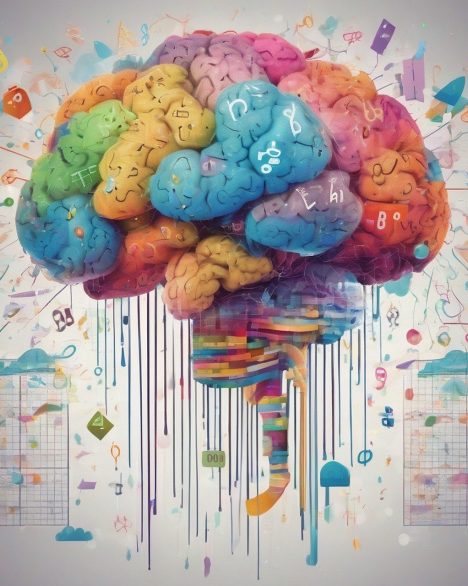
Click Below to Listen To An Introductory Audio About Neurodivergent Counselling (also referred to as Neurodiversity-Affirming Counselling)
A brief audio introduction to Neurodivergent Counselling.
Time: 1 Min 9 Seconds
Coming soon...
Working with a neurodivergent therapist — why it matters
I am neurodivergent myself. This isn't something I mention as a footnote — it is central to how I work and why I work the way I do.
Working with a neurodivergent therapist means something different to working with a neurotypical therapist who has read about neurodivergence. It means:
Implicit understanding — not just intellectual knowledge
There are things you won't need to explain. The exhaustion of social performance. The sensory overwhelm that others dismiss. The way your mind moves — associatively, laterally, intensely — and what it feels like when that is misunderstood or suppressed. The grief that can follow a late diagnosis. The complicated relief of finally having language for something you've lived your whole life.
I understand these things not only clinically but from the inside. That implicit understanding changes the texture of the therapeutic relationship in ways that are difficult to put into words — but that many neurodivergent clients describe as immediately and distinctly different.
No need to mask
Masking — the conscious or unconscious suppression of neurodivergent traits to appear more neurotypical — is exhausting and, over time, profoundly damaging to a sense of self. In our sessions, there is no need to mask. You can think aloud, change direction, take time to find words, move if you need to, be direct, be intense, go quiet, or communicate in whatever way feels natural to you.
This isn't a concession — it is simply how I work.
A neurodiversity-affirming model
I practise within a neurodiversity-affirming framework. This means I do not approach neurodivergence as a deficit to be corrected or a disorder to be managed. Neurodivergence is a different — not lesser — way of experiencing and interacting with the world. My role is not to help you become more neurotypical. It is to help you understand yourself more fully, process what has been difficult, and build a life that fits who you actually are.
Adaptations understood and already in place
Many neurodivergent people arrive in therapy having previously experienced environments that required them to advocate for their own needs — often exhaustingly and without success. In our work together, adaptations are not something you need to request or justify. They are already part of how I practice:
- Flexible and direct communication style
- No expectation of eye contact or conventional body language
- Comfort with silence, tangents, and non-linear thinking
- Clarity about structure, process, and what to expect
- Sessions that honour your sensory and processing needs
- Space for special interests, pattern recognition, and lateral thinking — which are often assets in therapeutic work
Lived experience and clinical expertise — combined
Good neurodivergent-affirming therapy requires both. Clinical training and experience provide the framework, the skills, and the ethical grounding. Lived experience provides something that cannot be taught — genuine, embodied understanding of what it is to be neurodivergent in a world not built for you.
I bring both.
Neurodivergent diagnosis — navigating identity, trauma, and integration
Neurodivergent diagnosis — navigating identity, trauma, and integration
Finding out you're neurodivergent — whether you've been formally diagnosed or have come to recognise it yourself — can change a lot. Things you'd struggled with for years start to make sense, and you might feel relief and something harder to name at the same time. I work with a lot of people at exactly this point, and I understand it from the inside as well as the consulting room.
Identity — A diagnosis later in life can shake up the story you've told about yourself. You start looking back at childhood, school and relationships and seeing where you were misunderstood, or where you'd quietly given up on a version of yourself that never quite fit. All of that is welcome here.
Trauma — A lot of neurodivergent people have spent years being misread, corrected, or expected to cope in places that were never built for how their mind works. That takes a toll, even if no one ever called it trauma. It's something we can work through together, slowly and at your pace.
Integration — This work isn't about fixing your neurodivergence or putting it to one side. It's about bringing it all together — what you've just understood, what you've lived through, and who you're becoming — into a sense of yourself that actually feels like you.
Online EMDR Therapy for Neurodivergent Adults
EMDR can be a particularly powerful therapeutic modality for neurodivergent adults — and I believe it is most effective when delivered by a practitioner who understands neurodivergence from the inside.
Why EMDR and neurodivergence are a natural fit
Neurodivergent people are significantly more likely to have experienced trauma — through adverse childhood experiences, educational difficulties, social exclusion, bullying, repeated misattunement, and the cumulative effect of living in environments that required constant adaptation. EMDR is specifically designed to process exactly this kind of layered, relational, and complex trauma.
EMDR also works differently to talking therapy — and for many neurodivergent people, this is precisely its appeal. It does not require you to find the right words for your experience. It does not depend on a linear narrative. It works with images, sensations, emotions, and fragments — which often maps more naturally onto neurodivergent processing styles than traditional conversation-based approaches.
Adaptations to EMDR for neurodivergent clients
Standard EMDR protocols were developed primarily with neurotypical clients in mind. Effective EMDR for neurodivergent adults requires thoughtful adaptation — and an understanding of how neurodivergence affects the processing of trauma, the experience of bilateral stimulation, and the therapeutic relationship itself.
In my practice, adaptations include:
- Extended preparation phases — building internal resources and safety with additional care and time, recognising that neurodivergent nervous systems may require more thorough resourcing before processing work begins
- Flexible bilateral stimulation — working collaboratively to find the form of bilateral stimulation that works best for you, whether visual, tactile, or auditory, and adjusting intensity and pace throughout
- Explicit psychoeducation — clear, detailed explanation of every stage of the process, because understanding what is happening and why is important for many neurodivergent clients
- Non-linear processing — recognising that neurodivergent processing may not follow the expected sequence and adapting accordingly, without pathologising divergence from the standard model
- Sensory awareness — awareness of sensory sensitivities that may affect the experience of bilateral stimulation or the online therapeutic environment, and adjusting accordingly
Alexithymia — working without a clear emotional vocabulary
Many neurodivergent adults experience alexithymia — difficulty identifying, describing, or distinguishing between emotions. Standard EMDR relies heavily on accessing and articulating emotional states. In my work with neurodivergent clients, I adapt the approach to work with physical sensations, images, and somatic experience rather than requiring clear emotional labelling — meeting you where you are rather than where the protocol assumes you will be.
Synaesthesia and sensory processing differences
For clients who experience synaesthesia — where one sense automatically triggers another — or significant sensory processing differences, the experience of bilateral stimulation may be qualitatively different and require careful, collaborative exploration. I approach this with curiosity rather than assumption, working with whatever arises rather than expecting a standardised response.
A non-pathologising frame throughout
Perhaps most importantly, the EMDR work I do with neurodivergent clients is held within a consistently non-pathologising frame. The goal is never to change how your mind works. It is to help you process what has been painful, release what has been stuck, and move forward with a clearer, more integrated sense of who you are — neurodivergence and all.
Who This Is For

This page may resonate with you if...
- You are autistic, ADHD, dyslexic, dyspraxic or otherwise neurodivergent—whether formally diagnosed, self-identified or still exploring your neurodivergence.
- Previous therapy felt as though it missed something important or expected you to adapt yourself too much.
- You're making sense of a recent neurodivergent diagnosis or reinterpreting your life through a new understanding of yourself.
- You believe your trauma is connected to experiences in childhood, education, relationships or the workplace.
- You're looking for neurodiversity-affirming EMDR that works with your nervous system rather than expecting you to fit a standard approach.
- You want a therapeutic space where you can simply be yourself.
You don't have to explain or justify the way your mind works.
Therapy offers a space where your neurodivergence is understood, respected and welcomed.
Get in touch
If you have any questions about EMDR therapy or Online Counselling, you’re very welcome to get in touch. I offer a free 15-minute consultation—an opportunity for us to talk about what’s bringing you to therapy, whether EMDR could be a helpful approach, and whether we might be a good fit to work together.
You can:
- Fill out the contact form
- Or call or message me on +44 (0)7815 156 495 if you'd prefer to speak directly or leave a voicemail.
I’m happy to answer any questions you may have before booking your first appointment.
I aim to respond to all enquiries within 24 hours. All contact is treated with the utmost confidentiality and handled using secure phone and email services. You can learn more about how your information is protected by reading my Privacy Policy.